
Critical thinking is one of the most vital skills a student can develop. In an era defined by rapid information flow, complex global challenges, and shifting societal norms, students need more than just content knowledge—they need the ability to think clearly, question deeply, and solve problems effectively. Developing critical thinking skills in students is not only essential for academic success but also for becoming informed, responsible, and capable citizens.
Critical thinking goes beyond memorizing facts or following instructions. It involves analyzing information, evaluating arguments, identifying biases, recognizing assumptions, and making well-reasoned decisions. These skills are vital in virtually every aspect of life—from evaluating news articles and forming opinions to making career choices and resolving conflicts. When students learn how to think critically, they are empowered to navigate uncertainty and complexity with confidence and clarity.
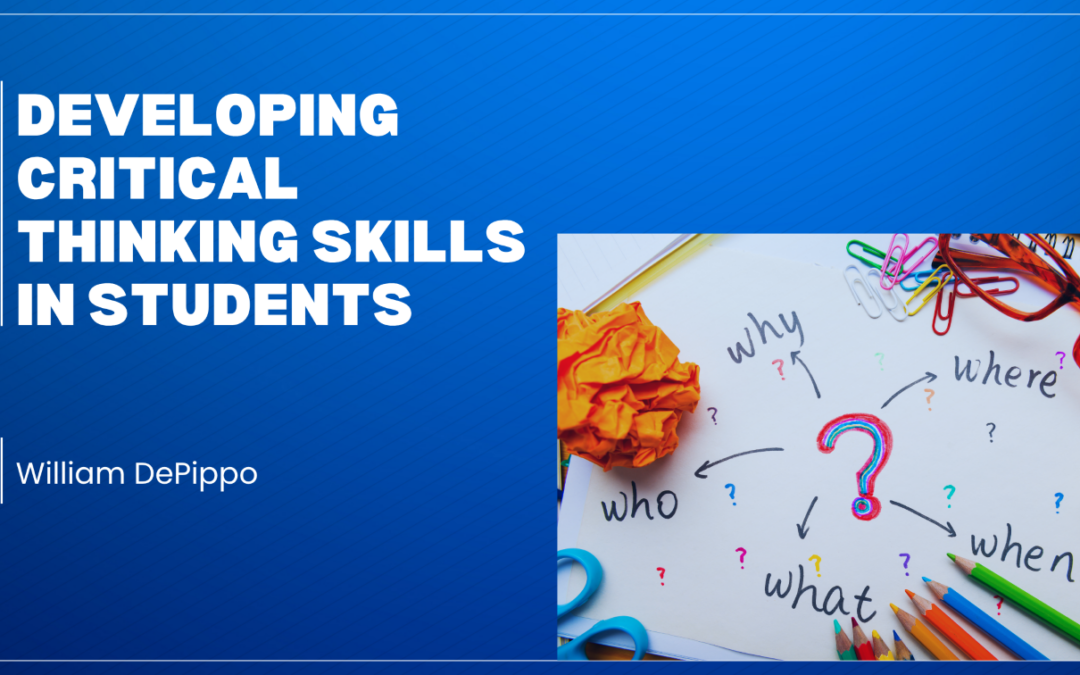
One of the first steps in developing critical thinking is encouraging curiosity. Students should be taught to ask questions—not just any questions, but meaningful ones. Rather than accepting information at face value, they should be guided to dig deeper. What evidence supports this claim? What are the possible alternatives? What might be missing? Creating a classroom culture that values inquiry over compliance lays the groundwork for critical thinking to thrive.
Reading comprehension is another powerful vehicle for fostering critical thought. By analyzing texts for themes, arguments, tone, and structure, students learn to interpret and critique information. Encouraging students to compare perspectives, analyze author bias, and draw connections between texts helps them become more discerning readers and thinkers. Incorporating diverse texts from various cultures and viewpoints also helps broaden their understanding of the world.
Classroom discussions are essential for promoting critical thinking. When students engage in thoughtful dialogue with peers, they are exposed to different viewpoints, forced to defend their ideas, and encouraged to reconsider assumptions. Teachers can prompt deeper thinking by asking open-ended questions and guiding students to explain their reasoning. This process of back-and-forth builds analytical skills and helps students articulate their thoughts more effectively.
Problem-solving tasks are another effective method. Whether through math problems, science experiments, or social dilemmas, students benefit from working through complex issues. Rather than simply finding the “right” answer, students should be encouraged to explore multiple approaches, evaluate potential outcomes, and justify their conclusions. These experiences help develop persistence, creativity, and logical reasoning.
Writing assignments also provide a powerful opportunity to build critical thinking. When students write persuasive essays, conduct research, or reflect on learning experiences, they are engaging in higher-order thinking. They must structure arguments, evaluate sources, and present ideas clearly. Feedback from teachers can then help refine their thinking, pushing them to clarify, revise, and deepen their insights.
Technology can enhance critical thinking when used thoughtfully. Digital tools and platforms allow students to gather, analyze, and present information from multiple sources. Online simulations, debates, and interactive activities can create opportunities for problem-solving and exploration. However, students also need to learn how to assess the credibility of online information and recognize misinformation—skills that are more important than ever in the digital age.
Teachers play a crucial role in developing critical thinkers. They must model critical thinking themselves—by questioning assumptions, acknowledging uncertainty, and demonstrating how to evaluate evidence. They should also create safe learning environments where students feel free to express ideas, make mistakes, and learn from them. Constructive feedback and reflection are key parts of the process.
Importantly, critical thinking should be woven into every subject, not just language arts or social studies. In science, students can design experiments and interpret results. In math, they can explore different problem-solving strategies. In art, they can critique works and express interpretations. When critical thinking becomes part of the learning culture across disciplines, students begin to see it as a way of life rather than a one-time skill.
Parents and communities also have a role to play. Encouraging children to ask questions at home, involving them in decision-making, and discussing current events can reinforce critical thinking outside the classroom. Real-world experiences, such as volunteering or internships, provide additional opportunities for applying these skills in meaningful contexts.
In a world that demands thoughtful engagement, critical thinking is not a luxury—it is a necessity. Developing these skills in students empowers them to lead, innovate, and make informed choices. It prepares them not just for tests, but for life.
By fostering curiosity, encouraging dialogue, and challenging students to think deeply, educators can help shape the next generation of problem-solvers and change-makers. Critical thinking, once cultivated, becomes a lifelong tool for success, leadership, and positive impact.